SMT assembly
Six lines with 3D SPI on every board, nitrogen reflow and three inline AOI gates. Chip placement down to 0.4 × 0.2 mm.
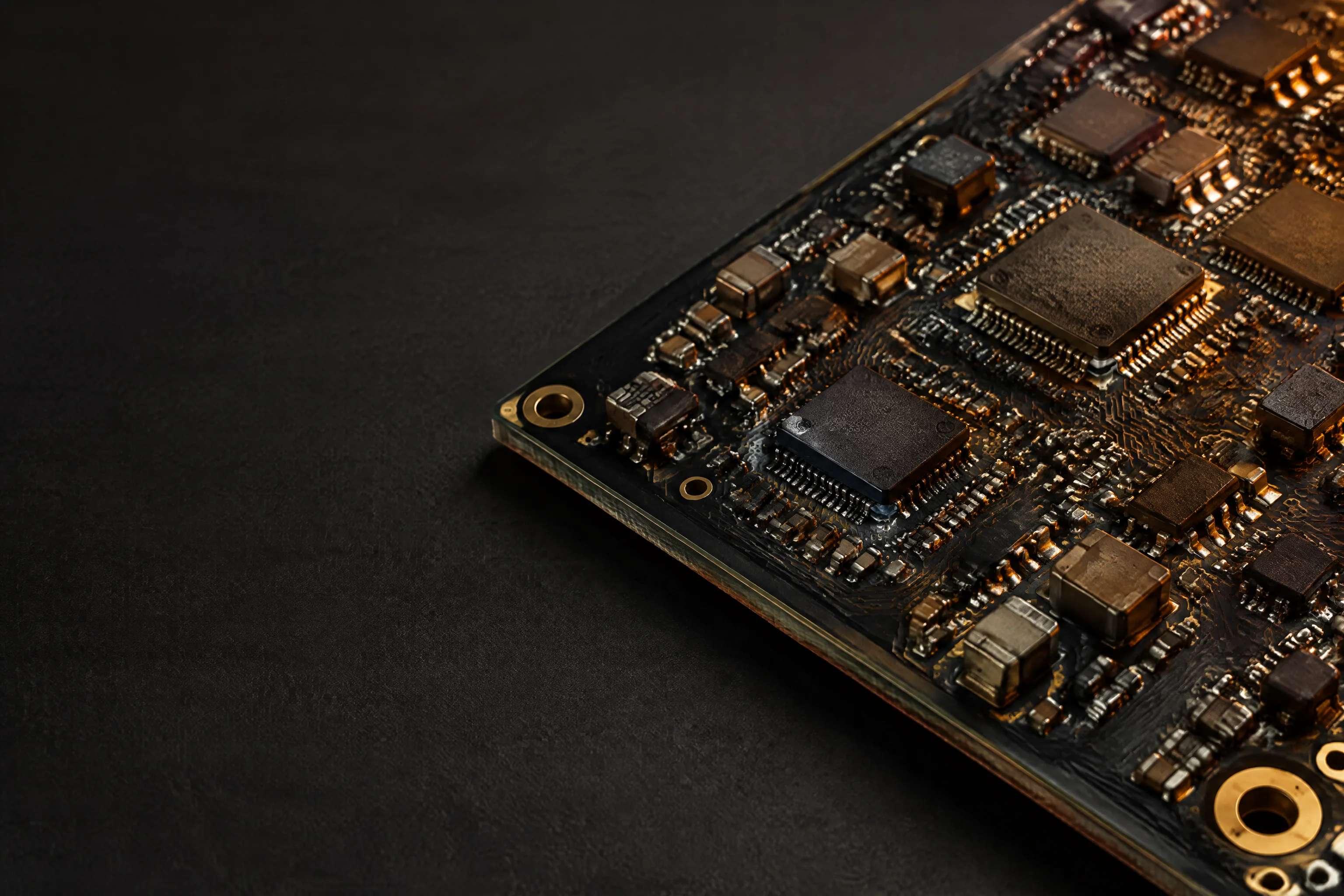
SMT, through-hole and mixed-technology assembly with in-house 3D AOI, X-ray and functional test in San Jose, California. DFM review in 24 hours, firm quote in 48.
We are a contract assembler, not a broker. Buyers hand us a Gerber set, a BOM and a quantity break; what comes back is a tested assembly with the process data behind it.
FLASHPOINT PCBA builds printed circuit board assemblies for hardware teams that would rather not change supplier between engineering samples and volume. Across 42,000 sq ft in San Jose and 18,000 sq ft in Penang we run six SMT lines on three shifts, 210 people, and a component store holding 4,000 unique part numbers under ESD control.
The process window is published rather than negotiated per enquiry. We place 01005 chips and 55 mm connectors on the same line, hold 0.35 mm pitch BGA and 0.3 mm CSP, and build panels from 20 × 20 mm up to 610 × 510 mm with a 0.4 mm to 6.4 mm finished thickness. Placement accuracy is ±35 µm at 3σ for chip parts and ±25 µm at 3σ on fine pitch.
Everything after the bare board happens in this building: laser-cut stencils turned in 4 hours, 3D SPI on 100 % of boards with a CpK ≥ 1.67 gate, 12-zone nitrogen reflow held to ±1.5 °C profile repeatability, two wave pots and three selective solder robots for 0.6 mm to 6.4 mm hole fill, inline 3D AOI at three points, 2D and 3D CT X-ray, aqueous cleaning verified to 1.56 µg NaCl-eq/cm², conformal coating to IPC-CC-830, and functional test on fixtures we design and build ourselves.
What stays with you is the design and the tooling. Stencils, test fixtures and programming transfer to the customer after first article, so a second source becomes a commercial decision rather than a technical rebuild.
Every card below names the number that decides whether your board fits. If it does not fit, we say so in the DFM report rather than on the third build.
Six lines with 3D SPI on every board, nitrogen reflow and three inline AOI gates. Chip placement down to 0.4 × 0.2 mm.
Two wave pots and three selective robots, nitrogen inerted, with solder pallets and fixtures machined in-house.
SMT and through-hole on one board, sequenced so bottom-side masking and double reflow do not cost you a whole pass.
The same line, the same fixture and the same process engineer from the pilot run through to repeat orders.
BOM scrubbing against lifecycle status, authorised distribution only, and bonded stock for long-lead lines.
3D AOI, 2D and 3D CT X-ray, flying probe, in-circuit, JTAG boundary scan and custom functional fixtures.
Harness, enclosure integration, gaskets, firmware flashing and serialised packing at level 3 through level 5.
Four gates sit between a printed panel and a shipped assembly. Each one has a threshold, a record and an owner, and none of them can be waived by a delivery date.
Gerber, drill, BOM with manufacturer part numbers, quantity breaks and test requirements. An engineer reads the package the same working day.
A written DFM report in 24 hours and a firm turnkey price in 48, with alternates listed and their lead times stated.
Stencil in 4 hours, programming, then a pilot run 15 working days after DFM sign-off with a full FAI report and a golden sample.
Line assignment by volume, SPI and 3D AOI at every gate, X-ray on area-array packages, and MES records written per serial number.
Fixture test or burn-in, certificate of conformance, ESD bag with desiccant and humidity card, then DDP or DAP to your dock.
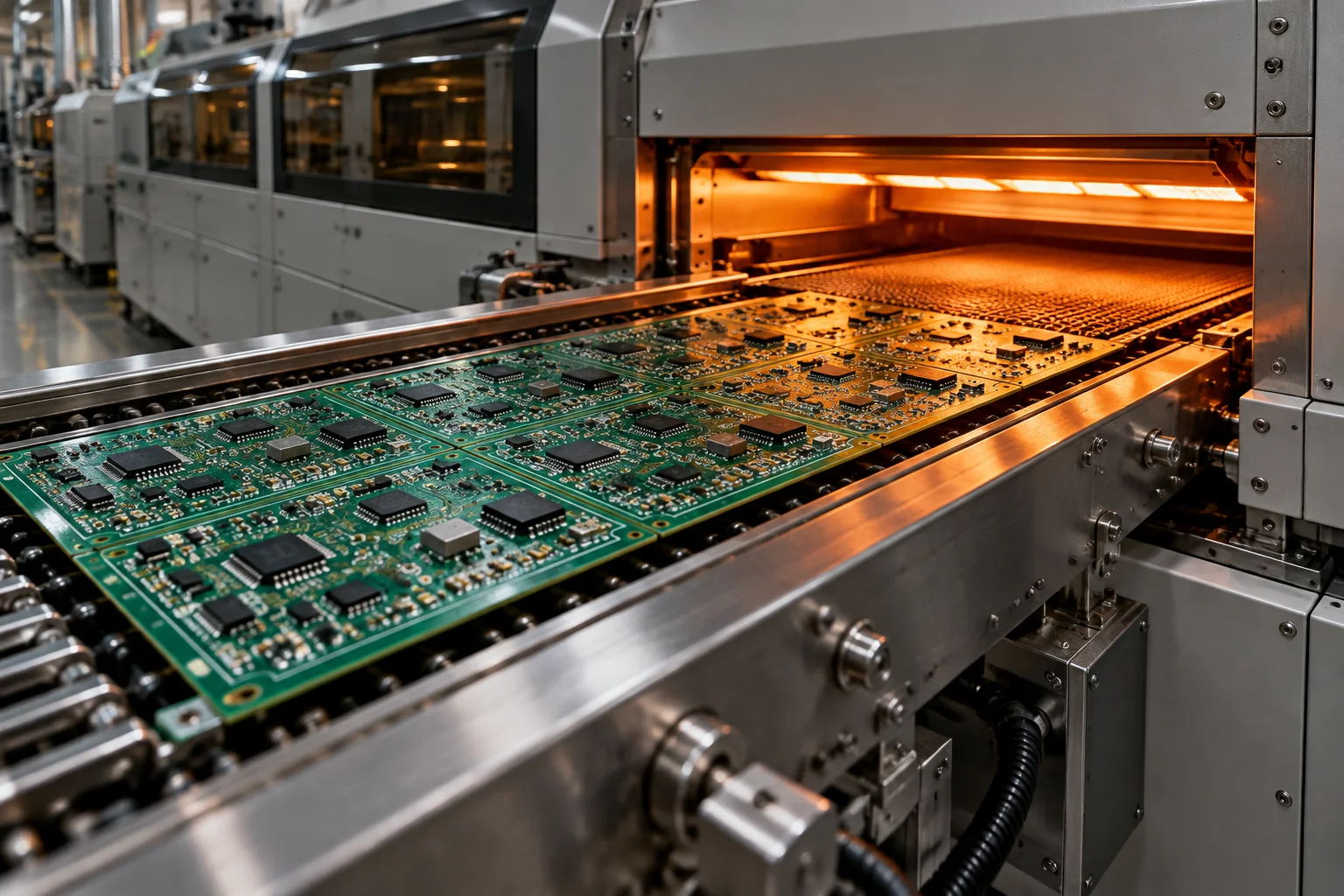
Most of the risk in a new build is decided before anybody buys a component. Here is where the first 48 hours go.
The package is logged and an engineer opens the Gerber against the BOM by hand. Panelisation is proposed, fiducials and tooling holes are checked, and the land patterns are compared with IPC-7351B density levels. Anything that will not survive the printer is flagged with the measurement that broke it, not with an opinion.
By the 24-hour mark you have a written DFM report: changes that are required, changes that are optional, alternates for parts with long lead times, and the effect of each on unit price. A firm quote follows within 48 hours of a clean BOM and Gerber set, itemised by material, placement, test and tooling. NRE is $0 on a standard single-sided SMT build; fixture NRE is quoted separately and credited back at 5,000 units.
Two things decide whether a programme ramps cleanly: how the first article is built, and how much of the process is actually measured.
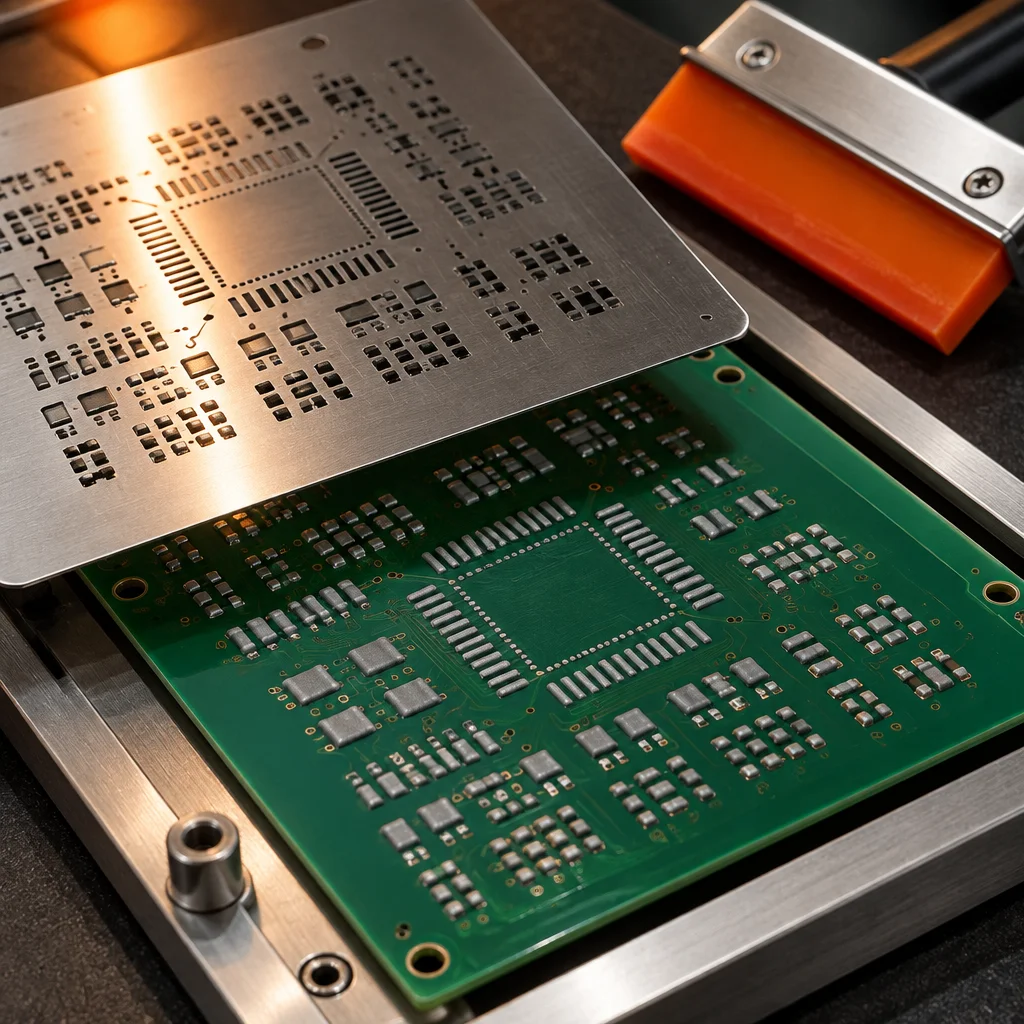
One of the four San Jose lines is reserved for NPI and flex work, so a 5-board prototype is not queued behind a 20,000-unit release. Stencils are laser cut in 4 hours from your Gerber. The first article carries X-ray, cross-section and dimensional data, and 38 programmes are in NPI at any given time.

3D AOI runs after print, after reflow and after depanel. X-ray covers every BGA, CSP and LGA, with 3D CT where voiding or head-in-pillow is a risk. Functional test runs on fixtures we machine and program in-house, and every result is stored against the board serial number for 10 years.
Class III workmanship, device history records, and lot-level traceability from reel to serial number.
Controlled documentation, ITAR-registered handling and first-article inspection to AS9102 practice.
PPAP submissions, 400 A bus joints and thermal cycling verification on high-current assemblies.
Conformal coating, wide-temperature solder profiles and vibration screening for machine-mounted boards.
Heavy copper, selective solder on bus bars and isolation testing on battery management assemblies.
Fast changeover between variants, mixed-model line balancing and cost-down loops on the top placements.
Payment terms are Net 30 with approved credit, Net 15 on a first order, and card accepted under $10,000. Tooling — stencils, test fixtures and programming — belongs to the customer after first article. Certificate copies and facility codes are released under NDA on request.
Prototypes run on the NPI and flex line in San Jose, one of the four lines on that floor. When a design releases to volume it moves to a volume line with the same stencil, the same fixture and the same process engineer, which is why the first-article data still applies. The 5-board minimum applies to prototypes; there is no MOQ on a production repeat order under an existing programme.
The DFM report lists every line on the BOM that is end-of-life, single-sourced or quoted beyond 16 weeks, together with a cross-reference candidate and the qualification each one needs. We buy from authorised or franchised distribution only, hold bonded stock for repeat programmes, and model last-time-buy quantities against your forecast before a part disappears.
Whatever the drawing calls for. IPC-A-610 Class 2 is the default for industrial and consumer work, Class 3 for medical, aerospace and any assembly with a documented reliability requirement. The class changes the acceptance criteria on fillet height, voiding and cleanliness, so it is fixed at DFM sign-off rather than at final inspection, and the 12-month workmanship warranty is written against that class.
Yes, with two weeks of notice so the line you want to see is actually running. Customer audits, source inspection and witnessed first articles are routine across the 130 active programmes. Audit rights, inspection methods and the notification window for a non-conformance are written into the quality agreement rather than left to good intentions.
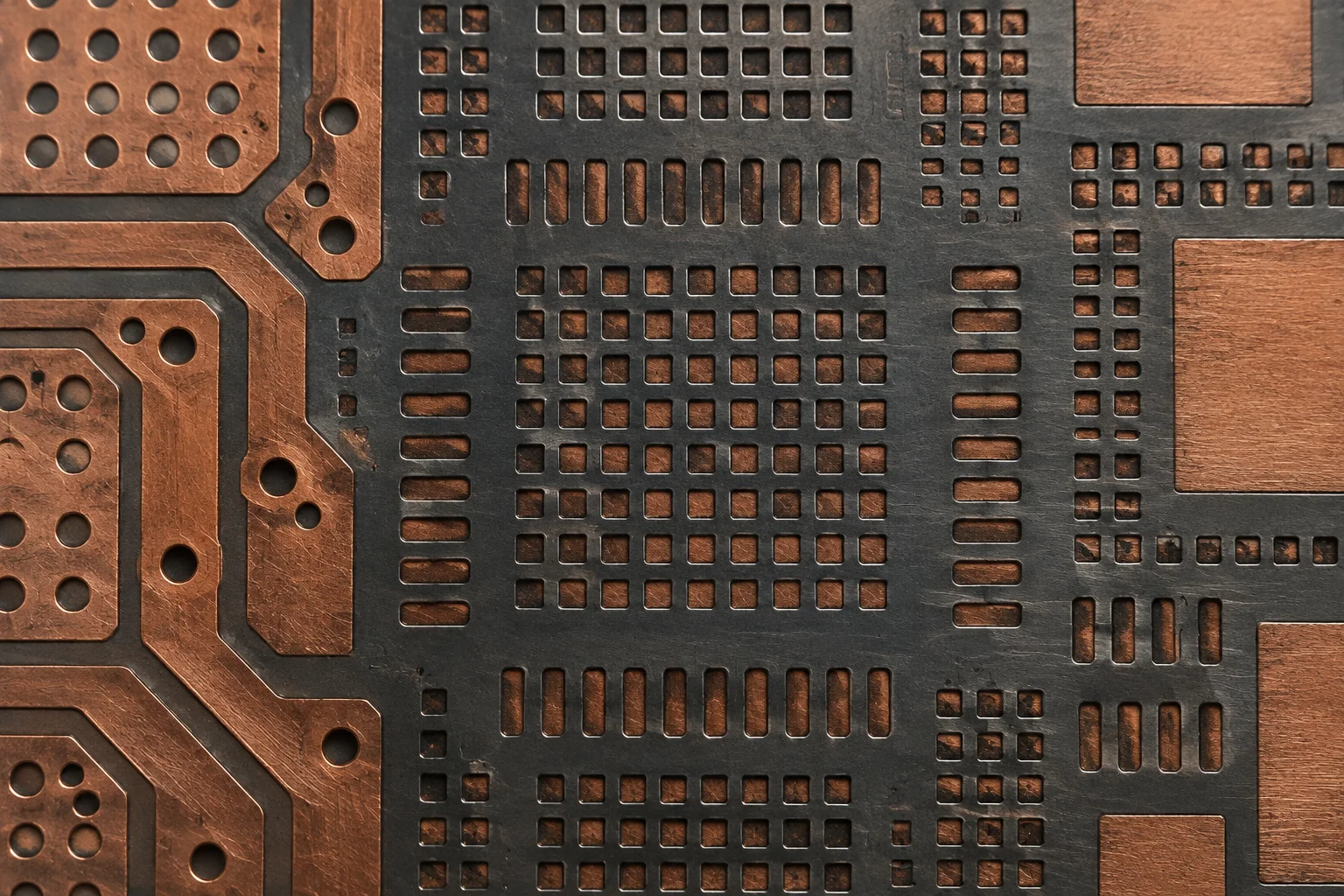
An engineer reads every new package. You will hear back with what we would change, what it costs and how long it takes — before you commit to tooling.