Six industries, six different sets of rules
The same four-layer board is a different product in a hospital, a cockpit, a vehicle harness and a factory cabinet. The laminate does not change. The cleanliness gate, the workmanship class, the traceability depth and the evidence pack do. We run 130 active customer programmes across six industry groups from San Jose, California and Penang, Malaysia.
- Industry programmes
- 6
- Active programmes
- 130
- Customers since 2009
- 400+
- Build record retention
- 10 years
The same board is a different product in a different industry
An industrial controller and an infusion-pump board can share a stack-up, a component set and a panel. They cannot share an evidence pack. One is released against a first-article report and a certificate of conformance; the other needs a device-history-style build record, a validated cleaning process and a lot release signed by quality assurance before it leaves the floor.
Three things change when a programme moves from one industry to another. First, the workmanship class: IPC-A-610 Class 2 accepts a fillet that Class 3 rejects, and the same operator, the same paste and the same 12-zone nitrogen reflow profile produce both. Second, the cleanliness gate: a water-wash process held to 1.56 µg NaCl-eq/cm² ionic contamination is normal for medical and aerospace work and unnecessary cost for a sealed consumer accessory. Third, the change-control surface: a process, material or site change that is a courtesy note on one programme is a notification that stops shipment on another.
We run all six programme groups on the same six SMT lines, so the discipline has to live in the paperwork and the routing rather than in a dedicated building. Every assembly is serialised at board level and every MES record is written against that serial. A medical lot and an automotive lot can run on the same line on the same shift and still be released under two different control plans, because the routing, the inspection gates and the release signature are per-programme, not per-machine.
What we will not do is pretend the industries are interchangeable. If a programme needs PPAP level 3 evidence, an AS9102 first-article report, an ionic contamination result under J-STD-001 or ITAR-registered technical-data handling, that requirement is quoted, scheduled and priced separately from the start.
- Governing standards
- ISO 13485:2016 · AS9100D · IATF 16949:2016
- Workmanship
- IPC-A-610 Class 2, Class 3 on request
- Ionic cleanliness gate
- ≤ 1.56 µg NaCl-eq/cm²
- Conformal coating
- IPC-CC-830, selective spray
- Board traceability
- Unit serial to MES record
- First article
- AS9102 structure on every NPI
- Record retention
- 10 years
Certificates are never published as images. Copies of the ISO 9001:2015, ISO 13485:2016, IATF 16949:2016, AS9100D and ISO 14001:2015 certificates are released under NDA, as are the ITAR registration letter and laminate recognition for UL 796.
Each industry forces one control the others do not
The list below is the short version of what a buyer inherits by industry. It is not a marketing split — it is the reason two quotes for the same Gerber set can differ by a factor of two once the controls are written in.
- 01Medical devices — ISO 13485:2016Ionic contamination held at or below 1.56 µg NaCl-eq/cm², a device-history-style build record per lot, and lot release by quality assurance before packing.→
- 02Aerospace & defense — AS9100D, ITAR registeredCountry-of-origin control on every component, ITAR-registered technical-data handling, and an AS9102 first-article report on the first article of every lot change.→
- 03Automotive & EV — IATF 16949:2016PPAP level 3 evidence, AEC-Q100 and AEC-Q200 part expectations, and qualification data for the -40 °C to +125 °C cabin and under-hood window.→
- 04Industrial automation — IPC-A-610 Class 2/3Multi-year availability planning with pre-approved alternates, conformal coating to IPC-CC-830, and a service life measured in decades rather than seasons.→
- 05Energy storage — UL 796 laminate recognitionHeavy-copper reflow, bus-bar and shunt attachment, hipot and isolation-resistance results logged per unit, and thermal imaging under load.→
- 06Consumer electronics — IPC-A-610 Class 201005 placement, cosmetic criteria for visible joints, and a ramp that turns a 50-board pilot into 30,000 units a month without a second supplier.→
The control matrix: what actually changes between industries
Read this as a routing decision, not a brochure. Every row is what the shop floor executes and what the buyer receives in the folder.
| Industry | Workmanship | Traceability | Cleanliness and coating | Release evidence |
|---|---|---|---|---|
| Medical devices | IPC-A-610 Class 3 | Unit serial, MES record, 10 years | Water-wash, ≤ 1.56 µg NaCl-eq/cm², optional IPC-CC-830 coat | Device-history-style build record, FAI, certificate of conformance |
| Aerospace & defense | IPC-A-610 Class 3 | Unit serial to lot and date code | Aqueous clean, IPC-CC-830 conformal coat, tin-whisker mitigation | AS9102 first-article report, material certificates, CoC |
| Automotive & EV | IPC-A-610 Class 2/3 | Unit serial, PPAP-level record | Aqueous clean, underfill and staking on large mass | PPAP level 3 file, control plan, dimensional and functional results |
| Industrial automation | IPC-A-610 Class 2 | Lot serial with alternates history | Selective IPC-CC-830 coat, connector-level sealing | FAI report, control plan, availability statement |
| Energy storage | IPC-A-610 Class 2/3 | Unit serial with hipot log | Aqueous clean, potting-compatible residues | FAI, hipot and isolation-resistance results, thermal record |
| Consumer electronics | IPC-A-610 Class 2 | Lot serial and board-level serialisation | No-clean or water-wash, cosmetic criteria | FAI report, CoC, cosmetic inspection sheet |
What the buyer receives with every shipment
Documents are produced as a by-product of the build, not reconstructed afterwards. If a gate did not run, the record does not exist, and the lot does not ship.
Medical device pack
Device-history-style build record tied to the unit serial, first-article report, lot release signed by quality assurance, ionic contamination result to J-STD-001, certificate of conformance and written notice of any process or material change.
Aerospace and defense pack
AS9102 first-article report, certificate of conformance, laminate and material certificates, traceability to lot and date code, solderability records for stored material and the ITAR technical-data handling statement.
Automotive and EV pack
PPAP level 3 package with process flow, control plan, dimensional and functional results, plus IMDS-ready material data, AEC-Q part declarations and the reaction plan for a failed gate.
Industrial automation pack
First-article report, in-process control plan, conformal coat record with the IPC-CC-830 material class, long-term availability statement and the list of alternates already approved for the design.
Energy storage pack
Hipot and isolation-resistance results per unit, thermal imaging record captured under load, UL 796 laminate recognition reference and the transport packaging declaration for lithium-adjacent assemblies.
Consumer electronics pack
First-article report, certificate of conformance, cosmetic inspection criteria sheet with photographs of accept and reject limits, and the packaging and kitting specification used on the line.
Build records, test data and serialisation history are retained for 10 years in an IPC-1782-style data structure. Quote data is kept for 24 months. Nothing is deleted early on request unless the programme is closed in writing by the customer.
How long qualification takes, programme by programme
The front end is identical for every industry: DFM review on a new bill of materials and Gerber set inside 24 hours, a firm turnkey quote inside 48 hours. What diverges is the evidence the first article has to carry.
-
Day 1 to day 2
Intake, DFM and firm quote
Send Gerber in RS-274X, an Excellon drill file, an IPC-356 netlist and a bill of materials with manufacturer part numbers. We return a DFM report inside 24 hours and a firm price inside 48 hours for every industry group, including medical and aerospace, because the review is done by the same engineering team that will route the build.
-
Day 3 to day 12
Prototype and first article
5 to 50 boards in 5 to 8 working days on standard parts, or 8 to 12 working days where parts are consigned or long-lead. Every NPI gets a first-article report with X-ray, cross-section and dimensional data. Test fixtures are quoted separately and credited at 5,000 units.
-
Day 13 to day 27
NPI pilot run
Pilot quantities run 15 working days after DFM sign-off. This is where the industry split becomes visible: a medical pilot adds lot release and a cleanliness result, an aerospace pilot adds country-of-origin and AS9102 documentation, an automotive pilot adds the PPAP level 3 file and a control plan.
-
From day 28
Production and repeat orders
A production repeat order runs 3 to 4 weeks ARO under an existing programme with no minimum order quantity. A turnkey ramp with full kitting runs 4 to 5 weeks ARO. Combined capacity is up to 45,000 board assemblies a month across 6 SMT lines and 2 plants.
-
Ongoing
Change control and record retention
Process, material and site changes are notified in writing before implementation. Records are held for 10 years. Tooling — stencils, test fixtures and programming — belongs to the customer after first article.
Programmes with the names removed
NDA is the default on every programme. These three are described by industry, region and constraint only — no customer names, no logos, no part numbers.
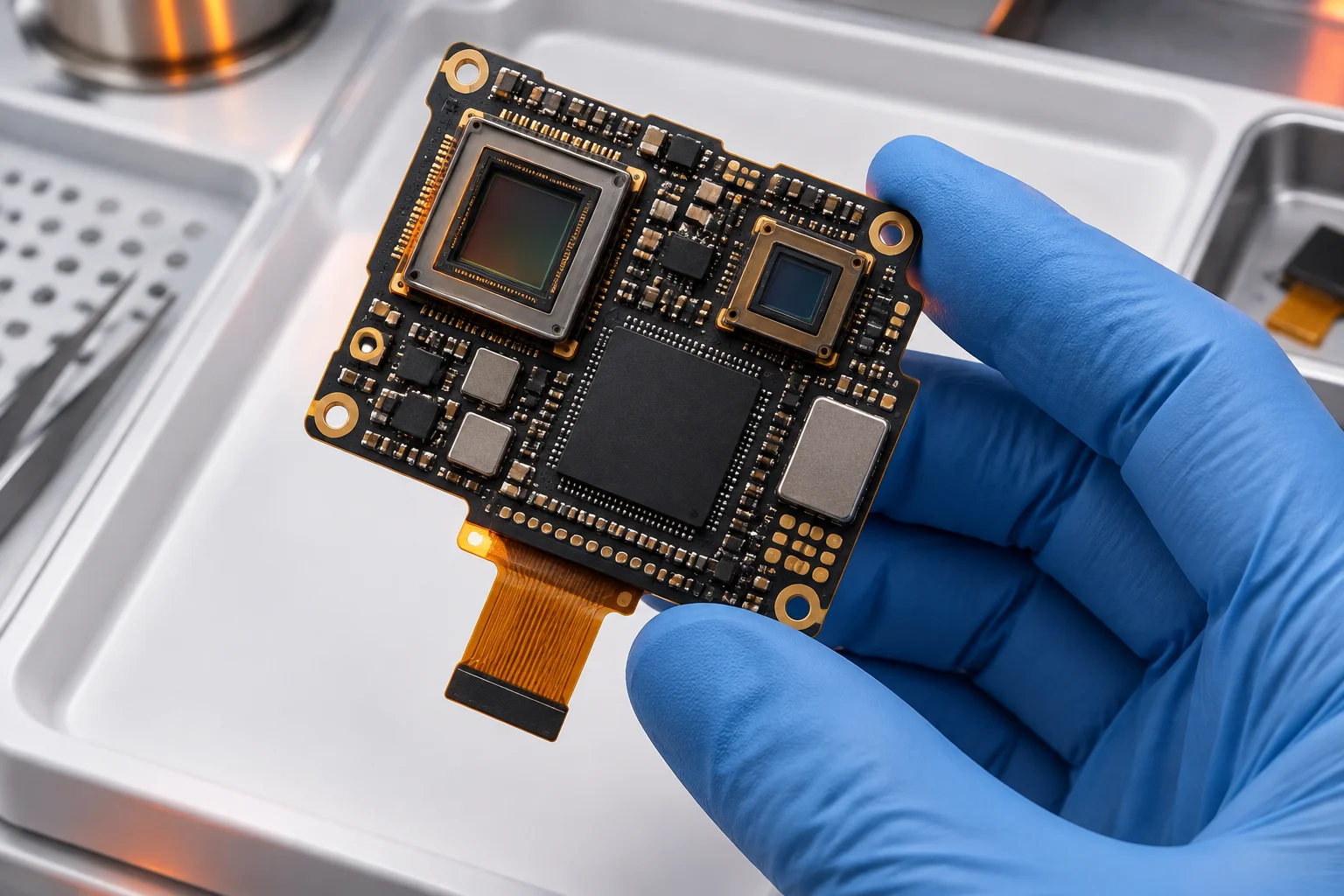
Infusion-pump control board, 2,000 units a month
A Class III infusion-pump OEM in the Upper Midwest moved from prototype to 2,000 units a month without changing supplier. Ionic contamination is measured every lot against the 1.56 µg NaCl-eq/cm² limit, coating runs to IPC-CC-830, and each unit carries a serial that resolves to its reflow profile and AOI result.
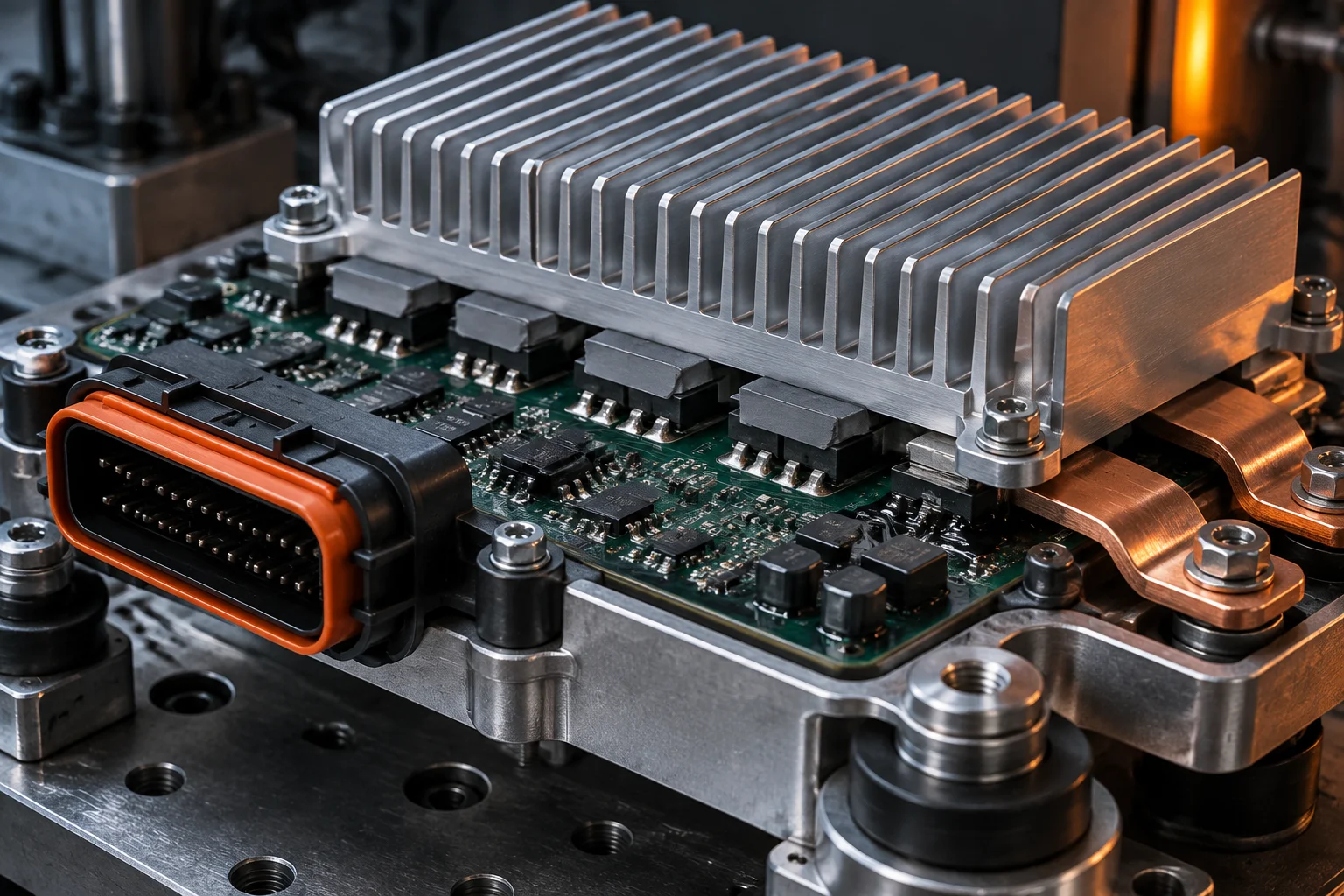
EV charger BMS board, 400 A bus
A charger maker needed a battery-management board with a 400 A bus, heavy copper and a PPAP level 3 file before the first production release. The programme runs at 20,000 units a month, with the Penang plant qualified as a second site so a single line stop cannot hold the vehicle programme.
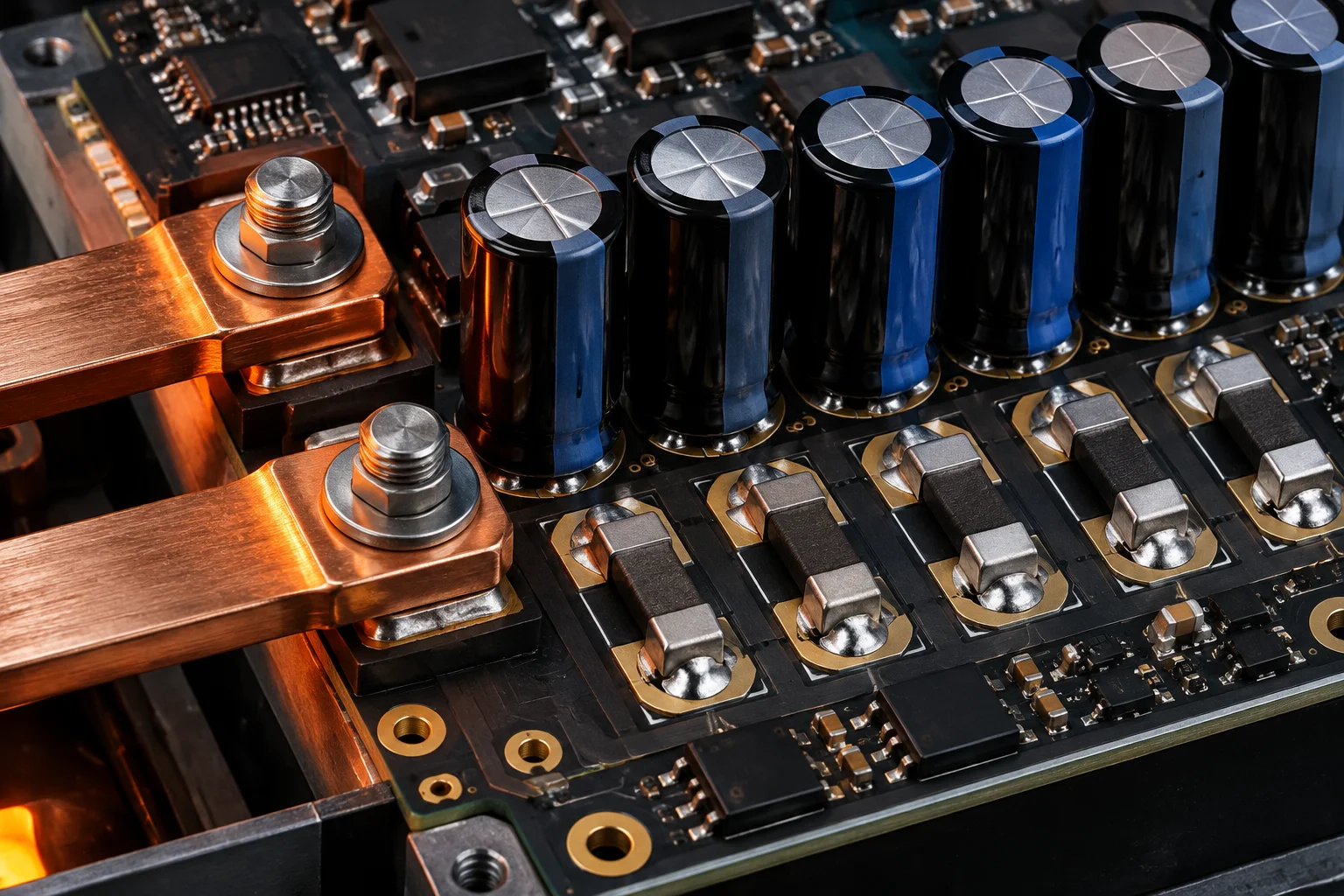
Flight-control sub-assembly, 20-year availability
An avionics integrator with a 20-year platform life needed a sub-assembly that would still be buildable in 2035. We qualified the design at IPC-A-610 Class 3, applied conformal coating to IPC-CC-830, and put a last-time-buy and alternates plan in place before the first production order.
What we will not take on
A supplier that says yes to everything is telling you it has not read your requirement. These are the refusals, and they are consistent across all six programme groups.
- Automotive safety-critical production with no approved PPAP file behind it.
- Implantable device assembly — we build Class II and Class III external and non-implantable devices only.
- Sourcing of ITAR-restricted material from countries outside the approved list, at any price or lead time.
- Consigned component builds released without incoming inspection and a traceability record.
- Publishing a customer name, logo or part number without written consent. NDA is the default on 130 active programmes.
- Quoting a fixed price against a bill of materials with missing manufacturer part numbers or an ambiguous surface finish.
- Shipping a lot whose ionic contamination, X-ray void or SPI CpK result fell outside the gate, even on a schedule-critical order.
- Certificate copies by email attachment. They are released under NDA through a controlled transfer.
Questions buyers ask before a programme moves
Yes, and we do daily. Line assignment is per programme, not per industry: the routing, the inspection gates, the control plan and the release signature travel with the work order. A medical lot released under ISO 13485:2016 and an automotive lot released under IATF 16949:2016 can share a reflow oven on the same shift because both are serialised at board level and both write their own MES record.
Moving from IPC-A-610 Class 2 to Class 3, adding a conformal coat, or adding PPAP evidence is a change order, not a rebuild. We re-run first article, restate the price and lead time inside 48 hours, and issue the revised control plan before the next lot starts. If the change affects tooling, the fixture credit at 5,000 units is recalculated with it.
A mutual NDA is the default and we will sign yours before the first Gerber upload. Technical data is held on access-controlled storage, ITAR-controlled data stays in the registered cell with screened personnel, and file access is limited to the DFM reviewer, the NPI engineer and the process engineer assigned to the programme. Records are retained for 10 years and never shared with another customer.
Send the Gerber set and the bill of materials
Tell us the industry and the standard you are held to. A DFM review comes back in 24 hours, a firm quote in 48, and the control set that applies to your programme is written into both.